

News list
新闻列表
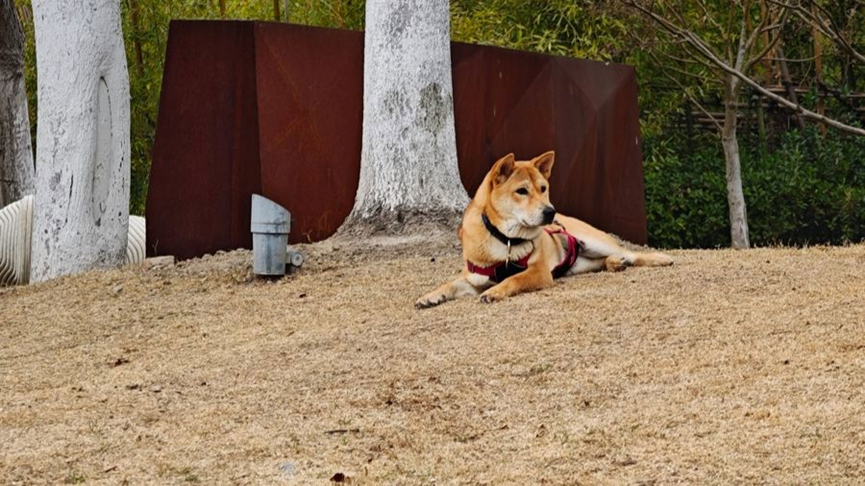
Recently, the news that "some malls in Shanghai have banned pets" sparked heated discussions online. Many netizens shared experiences of being denied entry to malls while bringing their pets, including venues like Suhewan MixC, Jing'an Kerry Center, and M500, which previously displayed "pet-friendly" signs.
Why are the management and service gestures of the mall repeated when facing pets? In the comments section, you can roughly find the answer: Some netizens have listed the negative effects caused by uncivilized pet raising behavior and support shopping malls to "return public areas to humanity"; Some people also expressed that if they want to share a restaurant or other space with cats and dogs, they would rather not consume.
However, on one hand, shopping malls that have already implemented "pet friendly" policies are under pressure from customer conflicts, and on the other hand, more and more consumer spaces are still embracing the pet economy one after another. Since last year, a number of newly opened shopping malls in Shanghai, such as Hongqiao Qianwan Impression City MEGA, have basically displayed the "pet friendly" sign; Established commercial giants like Henderson Plaza have also announced the implementation of pet friendly outdoor spaces in the third phase expansion project; Century Park and other parks and attractions are starting to extend olive branches to pets; Even on the sports field, pets are indispensable. Last year's Shanghai International Sports Trend Culture Festival specifically launched the "Hot Pet Sprout" section.
This time, the question may seem to be posed to the shopping mall, but in reality, it is a must answer question for the whole society under the booming pet economy. At present, the scale of pet owners continues to increase, and pet related industries are becoming increasingly diverse. The demand for pet clothing, food, housing, and transportation is constantly refining. Some consumer spaces want to seize this wave of traffic, but ignore that pets are essentially animals, and their natural habits are different from humans. In certain situations, they may even have a negative impact on human activities. How to balance the internal contradictions is not something that can be solved just by posting a friendly logo. More importantly, it is necessary to clarify as soon as possible the corresponding rules that need to be followed and maintained by various groups of people, businesses, public places, etc. behind the word "pet friendly".
Only by prioritizing rules can we benefit the development of industries and promote the symbiotic relationship between humans and pets.
Tightened regulations, wavering merchants
For pet owners, Shanghai can definitely be considered a "pet friendly" city. According to the "Shanghai Pet Consumption Distribution Index" released by the Shanghai Federation of Commerce and the Shanghai Industrial Transformation and Development Research Institute in September last year, there are already over 4000 pet stores in the city. According to data from the Health Consumption Office of the Municipal Consumer Protection Commission, there are already 46 pet friendly parks and shopping malls emerging in Shanghai.
However, it seems that the dynamic adjustment of these data is becoming more frequent at present. During a recent visit by reporters to Jing'an Kerry Center, staff members made it clear that the mall is no longer open to pets and "if customers carrying pets are seen on surveillance, they will be advised to leave".
A netizen also discovered that in the underground garage of a pet friendly shopping mall that they often go to recently, the pet stroller they used to put there has disappeared. They also witnessed two customers holding pet dogs being stopped on the first floor of the mall, and the pet friendly sign that was originally posted on the door has been torn off.
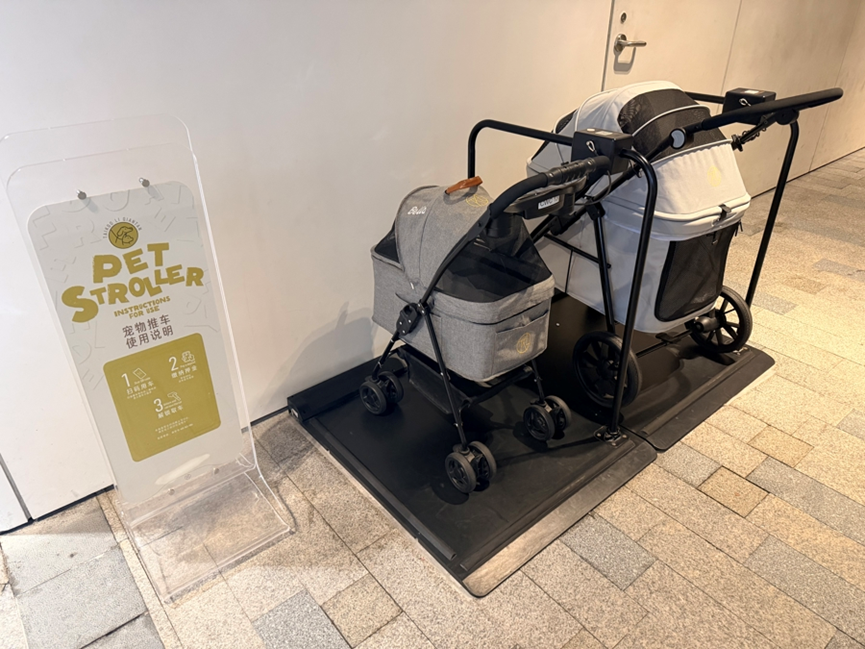
In fact, some pet friendly shopping malls and internal merchants have always had a wavering attitude towards pets. Some restaurants labeled as' pet friendly 'on the app may not necessarily allow pets to enter. ”Ms. Cui said that her German cat is naturally lively and likes to go to crowded places, so she takes it out at least once a week.
After browsing multiple pet friendly shopping malls, Ms. Cui discovered a set of "unwritten rules": some malls are "pet friendly without landing", meaning that pets must be held by people or kept in carts or backpacks, while some semi open malls assume that pets can land in the outdoor area on the first floor. Only a very small number of shopping malls allow pets to land indoors, and often require pets to have a shoulder height of no more than 35 centimeters. Anyway, bringing pets into the mall has always been quite troublesome
Some businesses want to catch pet traffic, but after operating, they find themselves having to choose between being friendly and unfriendly.
Previously, we allowed pets to be brought indoors, but now they can only dine in outdoor areas, "said the manager of a Western restaurant that was rated as" very friendly "by pet owners. Previously, dining indoors required following three rules: pulling a rope, staying in a stroller, and not lying on the table or sitting on the table. Pets can be placed on the ground outdoors. Later on, some diners insisted on letting the puppy sit on the table, while others were not under control and suddenly jumped out of the cart or crawled onto the table, affecting the experience of other diners. So we had to tighten our grip
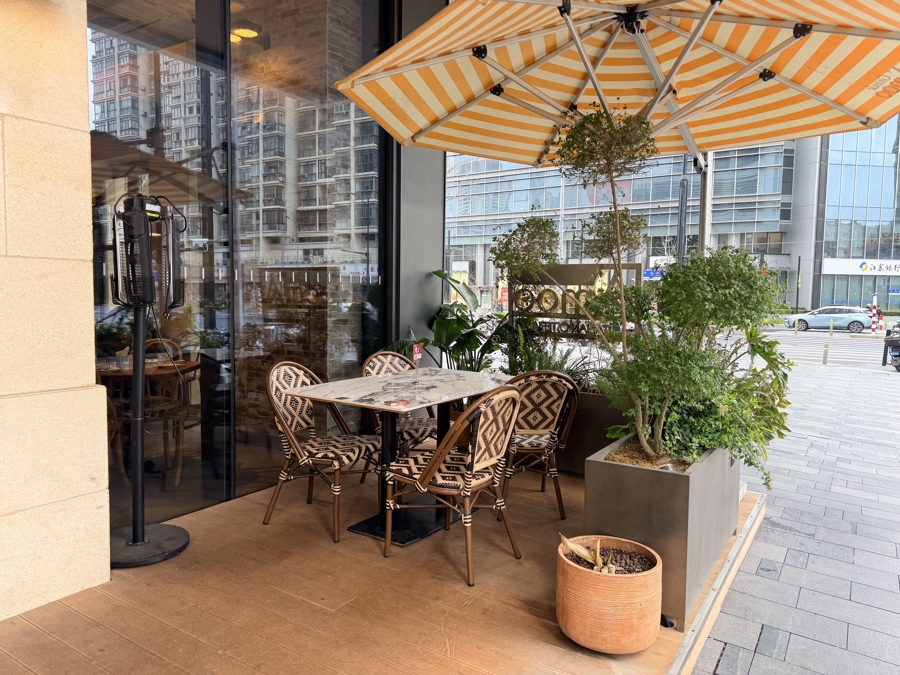
However, after pets were not allowed indoors, the Western restaurant still received negative reviews. Some customers say that we treat them differently and are 'fake friendly'. There's nothing we can do, but in order to attract customers with pets, we have to give up another group of customers, which is inevitable
In Panlong Tiandi, many indoor merchants allow pets to enter and set up corresponding signs at the entrance. A service staff member from a Chinese restaurant told reporters that cats and dogs are always allowed to enter the restaurant, as long as they pull a rope. There are definitely people who don't like small animals, and we can understand that they don't want to come. But Panlong World is a pet friendly business district, and the vast majority of those who come are cat and dog lovers who can accept living in the same room with their pets
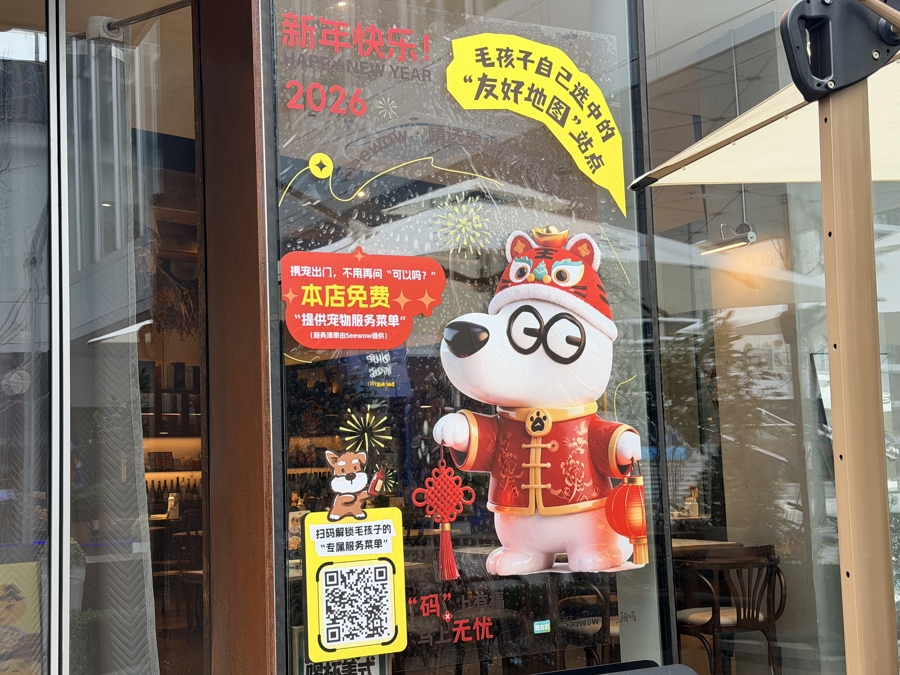
In fact, most shopping malls or businesses do not firmly choose a certain group of people. In interviews, many businesses expressed that whether pets can be brought is a "temporary solution". They are caught between opposing and supporting pet friendly factions, always maintaining a wait-and-see and cautious attitude, ready to change according to the situation at any time.
How did the contradiction arise? Can rules be reconciled first?
To understand why the regulations of the shopping mall have changed, it is necessary to first clarify how the conflict occurred.
During the visit, the reporter found that some contradictions are naturally present. For example, some people just don't like pets, and even fear them. They don't want humans and pets to be in the same space.
Some people are concerned that their pets may lose control and collide with children, especially in some community businesses and parks near their homes. Such concerns are widespread. Last year, Kunshan Park, which was opened to pets, sparked a debate between pet owners and other groups due to the daily commute of primary and secondary school students.
Of course, there are also people who do not dislike pets but have allergic reactions to them, so they have to stay away from them. These contradictions are difficult to reconcile and distinguish right from wrong in the short term.
But more contradictions are caused by unclear rules. Many pet owners have expressed in interviews that a considerable number of pet friendly shopping malls only use friendliness as a gimmick and fail to fulfill their corresponding responsibilities and obligations. They do not provide corresponding supporting facilities such as carts, nor do they specify management rules for regulating pet raising behavior. The corresponding cleaning forces have not been increased (pet friendly shopping malls often require cleaning to respond more promptly).
And some pet owners are also happy to "take advantage of loopholes", exhibiting uncivilized behaviors such as not holding ropes, walking at will, and even bringing pets to tables or chairs. So, just a soaking of dog urine that hasn't been cleaned up immediately may turn pet owners and non pet owners into opposing factions.
In order to promote the healthy and benign development of the pet economy, on December 31 last year, the China Department Store Association released the "Pet Friendly Shopping Mall Operation Standards" group standard, which was officially implemented on February 1 this year. The basic principle proposed by this standard is "clear responsibility" - shopping malls should fulfill their management responsibilities and provide necessary facilities; Pet owners should prioritize safety and health, raise their pets in a civilized manner, and maintain effective control over their pets in accordance with the convention; Merchants should regulate their own behavior and provide necessary facilities.
However, the reporter learned that before the standards were introduced, there were already many "truly friendly" commercial districts in Shanghai that could be easily copied by other commercial districts.
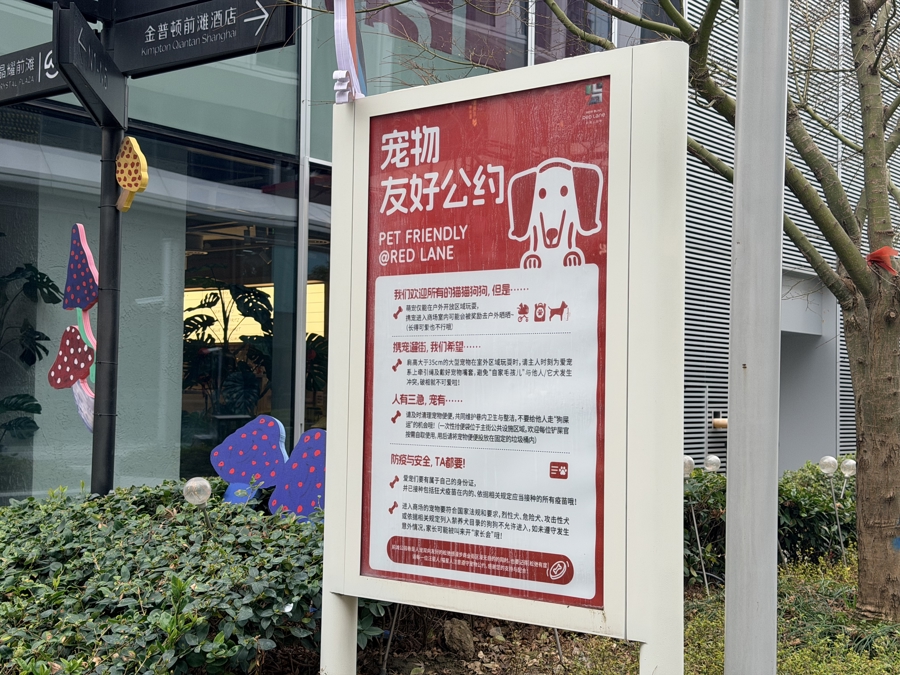
For example, in Qiantan Park Lane, there are signs of the "Pet Friendly Convention" hanging everywhere in the open commercial district, reminding owners to tie up their pets' leashes, clean up their pet feces in a timely manner, and provide disposable toilet bags in the public facilities area of the main street. Many restaurants also erect signs that say 'Welcome pets to the store', which guarantees consumers' right to know and avoids the embarrassment of conflicts after entering the store.
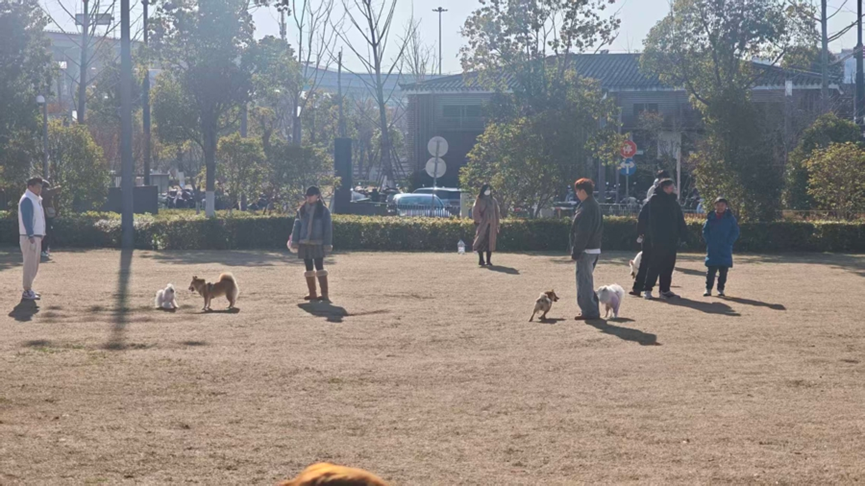
Panlong World is widely recognized as a "pet paradise". Not only can pet friendly businesses be seen everywhere here, but there are also large enclosed lawns and open lawns that are convenient for pets to socialize. A parent of a 'furry child' told reporters that when the weather is good, they don't even go into the store, but take something out and have a picnic on the lawn. Human beings can enjoy the rich consumption choices brought by commercial districts, and dogs can also play to their heart's content without having to compromise anyone
EKA Tianwu General Manager Ye Wenjing told reporters that the park will provide facilities such as storage areas, pet carts, pet snacks, and urine pads for pet owners. However, nowadays pet owners generally treat their pets as their own family, and they may not necessarily use some of the infrastructure we provide. Therefore, we now treat pets as a 'customer group' and continuously improve the quality of our supply. This month, an outdoor swimming pool will be opened to the public, where pets can swim while their owners can enjoy coffee and water scenery nearby. In the second half of the year, planned indoor and outdoor pet parks, as well as pet gyms, will also be launched one after another
In Ye Wenjing's view, various industries are now striving to embrace the pet economy. Even fragrance stores, clothing stores, etc., try their best to provide pet friendly services, and have not found any conflicts in operation so far. However, the catering industry is quite special, and in order to solve the problem of pets entering the store, EKA Tianwu has taken the lead in clarifying the rules. Due to the large outdoor space of most stores, the park guides businesses to install heating equipment in the outdoor area to ensure that outdoor spaces are available throughout the year, naturally separating pet owners from non pet owners. Individual indoor stores that offer pet dining have also designated dedicated areas for pets.
In recent years, the development of other pet related industries has also proven that as long as regulations take precedence, conflicts will be reduced. In April last year, the railway department piloted the high-speed pet transportation service of "isolated transportation, separation of humans and pets, and dedicated care" on some trains of the Beijing Shanghai high-speed railway, accelerating the standardized management of pet travel. As of now, the pilot scope has expanded from the initial 5 stations and 10 trains to 110 stations and 170 trains, allowing more and more "furry children" to safely follow their owners on their journey.
Last September, Shanghai implemented the "Guiding Opinions on Strengthening the Management of Park and Green Space Openness in the City" (hereinafter referred to as the "Guiding Opinions"). Although it did not specify the "threshold" for park and green space to "embrace" pets, many parks are further considering how to standardize the handling of the problem of human pet symbiosis under this guidance.
Not long ago, Century Park's new pet park began free trial operation, covering an area of nearly 12000 square meters. Citizens only need to make an appointment through the official mini program, register their dog certificate, and bring their pet dogs to play in the park.
Rural and outdoor neighborhoods have natural pet friendly genes, can we seize the opportunity?
The reporter found that currently pet friendly consumption spaces are often dominated by outdoor activities, such as open commercial districts, some green parks, rural areas, etc. Ye Wenjing also stated that compared to enclosed shopping malls, outdoor spaces face challenges such as public health brought by pets. The population density in outdoor spaces is relatively low, and they have a pet friendly gene, which gives them an advantage in creating new pet business models.
Many pet owners also believe that it is not necessary to take their pets to shopping malls. This itself is to meet people's needs, not pets' needs, "Ms. Guan, who owns three pet dogs, told reporters. She found that the puppies actually don't like to go shopping. They may obediently stay in the stroller, but most of the time they sleep listlessly. In commercial districts with a high density of pet dogs, she has also seen large dogs and small dogs with significant differences in size fighting, causing small dogs to be injured and bleed. She has also heard of some incidents of pet injuries.
The shopping mall has various smells and the environment is also very noisy, while some parks have large lawns for camping, picnicking, and walking dogs, and there are very few people. She will take the dog cubs to the more enclosed and uninhabited corners of the park, briefly release the leash for them, and play throwing and catching games with them. We don't have to squeeze others' space just to expand our own, but we can take our dogs to places that are willing to accept them and get along with people who can accept them, "said Ms. Guan.
This objectively brings opportunities for rural cultural tourism. Since last year, many "Shanghai One Hour Tourism Circle" destinations in the Yangtze River Delta region have begun corresponding strategic layouts. For example, the Yangcheng Lake Peninsula Tourist Resort in Suzhou has adopted a high-profile pet strategy; Bicester Suzhou Shopping Village, as the flagship shopping landmark of Yangcheng Lake Peninsula, has taken the lead in implementing "pet friendly" shopping; At the Indigo Hotel in Yangcheng Peninsula, pet carrying guests have exclusive areas and rooms, outdoor space in the restaurant where pets can dine with their owners, and a large outdoor lawn where pets can run freely and have fun
Jinshan District has also released a "pet friendly map", with 49 locations including communities, villages, parks, scenic spots, shopping malls, homestays, etc. equipped with pet friendly software and hardware facilities and fully open. As the first "pet friendly village" in Jinshan District, Baijia Village in Zhangyan Town also plans to launch activities such as the Pet New Year's Eve Market, Chongchao Camping Festival, and Health Carnival, while simultaneously developing functions such as cute pet culture and creativity, outdoor sports, and pet boarding, creating a comprehensive space for pet+culture, consumption, and leisure.

However, in practical operation, the mismatch between consumer demand and consumer space layout cannot be ignored. According to the "Shanghai Pet Consumption Distribution Index", currently the seven central urban areas of Jing'an, Huangpu, Putuo, Changning, Hongkou, Xuhui, and Yangpu account for only 4.6% of the city's total area, but they gather 32.4% of the city's offline pet consumption formats. Overall, pet consumption still follows the principle of proximity. If rural areas in the suburbs of Shanghai want to become a consumption destination for pet raising families, efforts need to be made in the development of diversified business models that can attract pet raising families to visit.
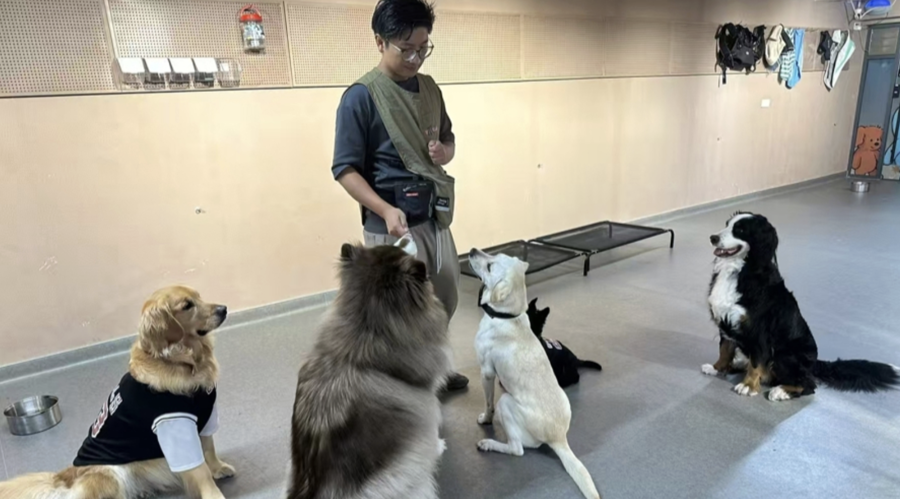
For example, Chongming, Qingpu and other districts have opened up internet famous "village cafes". The rural environment is both open and relatively secluded, suitable for parent-child families who travel by car. The vast outdoor fields are also open to "furry children".
In recent years, Fengxian District has built a complete park system, among which 14 have been selected for the city's pet friendly park list, ranking first in the city. A community leader who organizes offline pet events told reporters that since last year, more than half of the weekend pet gatherings organized by the community have chosen Fengxian. This place is spacious and well-equipped, which can basically meet the needs of people and pets, but there is still a lack of linkage with surrounding attractions. Next, we also want to explore the combination of human tourism and dog play, and Fengxian will still be the first choice for our route design.
